Sample lesson
My Daily Routine
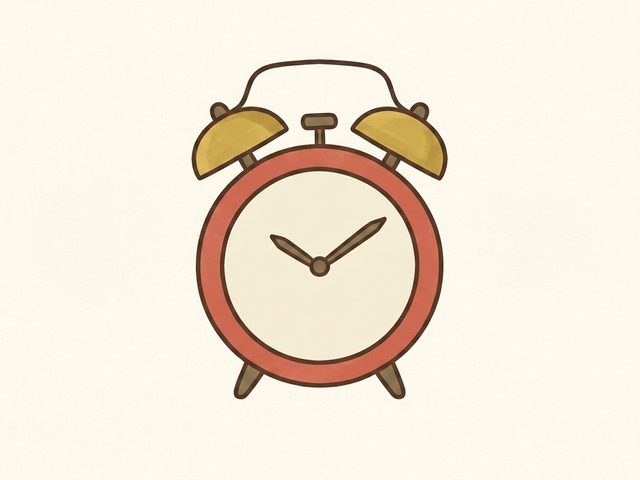
Created with LingoChorus and reviewed for publication (2026-07-21). AI-assisted — in class, every pack is a teacher’s to review and edit first.
A real generated pack — print it, present it to a class, or make your own.
Objective
I can say what I do every day using frequency adverbs, like 'I always brush my teeth.'
Structure of the day
I [frequency adverb] [verb].
This frame drills frequency adverbs (always, usually, never) with present simple verbs to describe daily habits. It helps children talk about routines naturally and repeatedly.
- I always brush my teeth.
- I usually eat breakfast.
- I never go to bed late.
Vocabulary (7)
| Word | Meaning | Example |
|---|---|---|
| wake up | to stop sleeping and open your eyes | I wake up at seven o'clock. |
| eat breakfast | to eat food in the morning | I always eat breakfast with my family. |
| get dressed | to put on your clothes | I get dressed after breakfast. |
| brush my teeth | to clean your teeth with a brush | I always brush my teeth at night. |
| go to school | to walk or ride to the place where you learn | I go to school every morning. |
| do my homework | to do school work at home | I usually do my homework after school. |
| go to bed | to lie down and sleep at night | I never go to bed late. |
Flashcards — one style
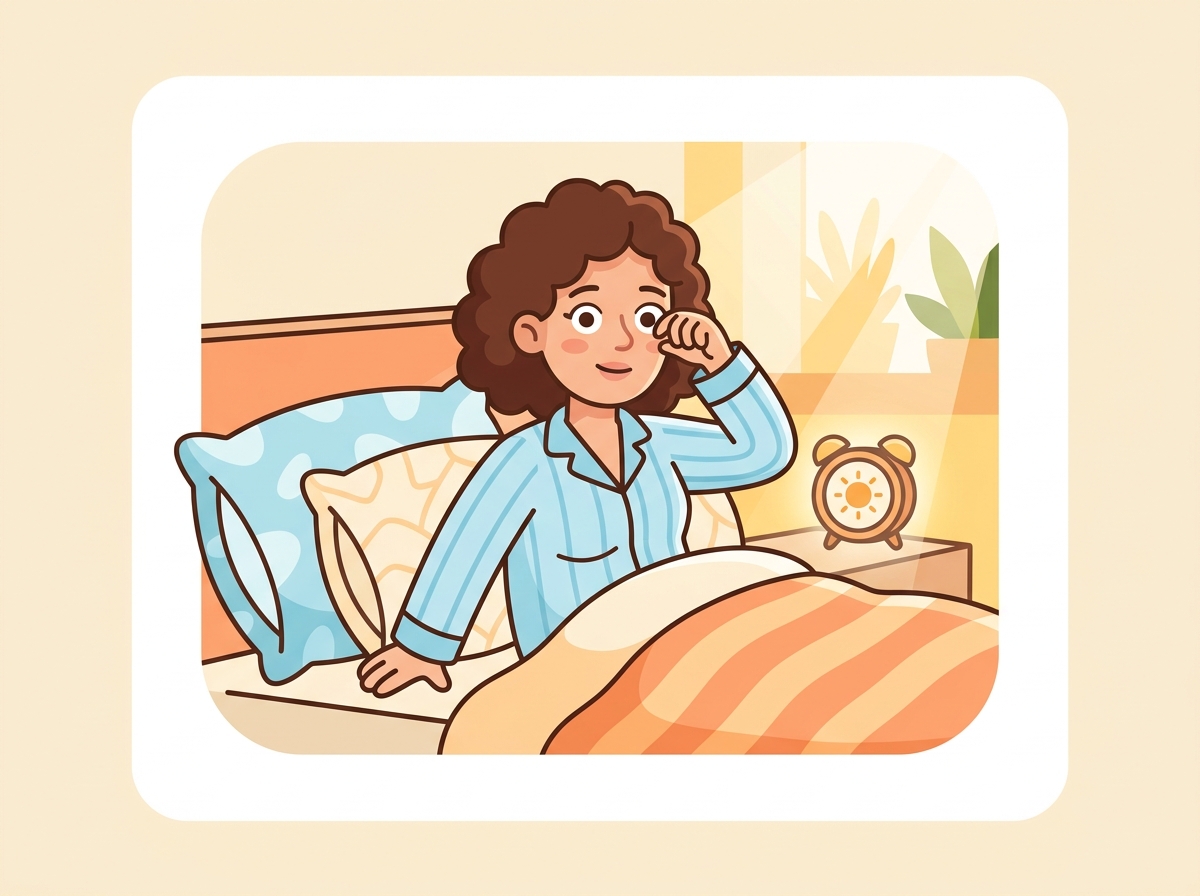
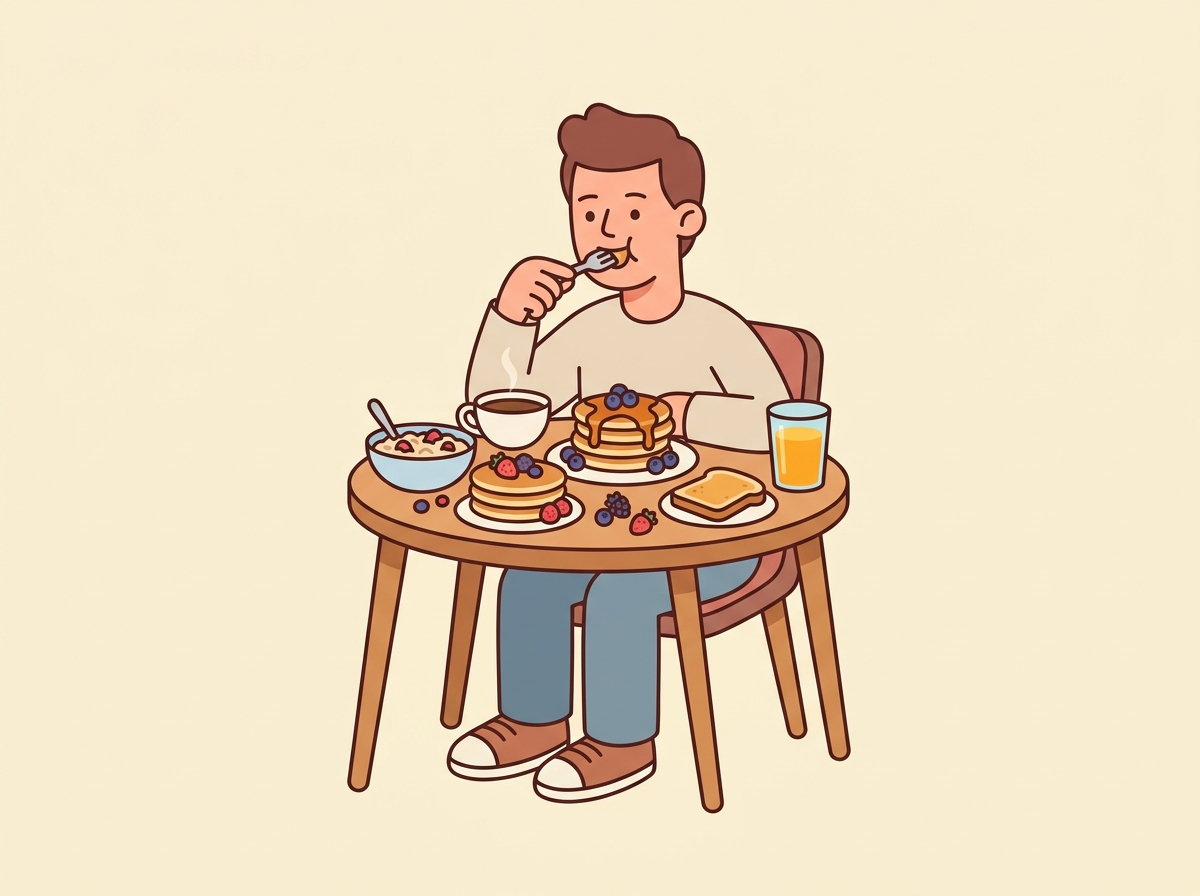
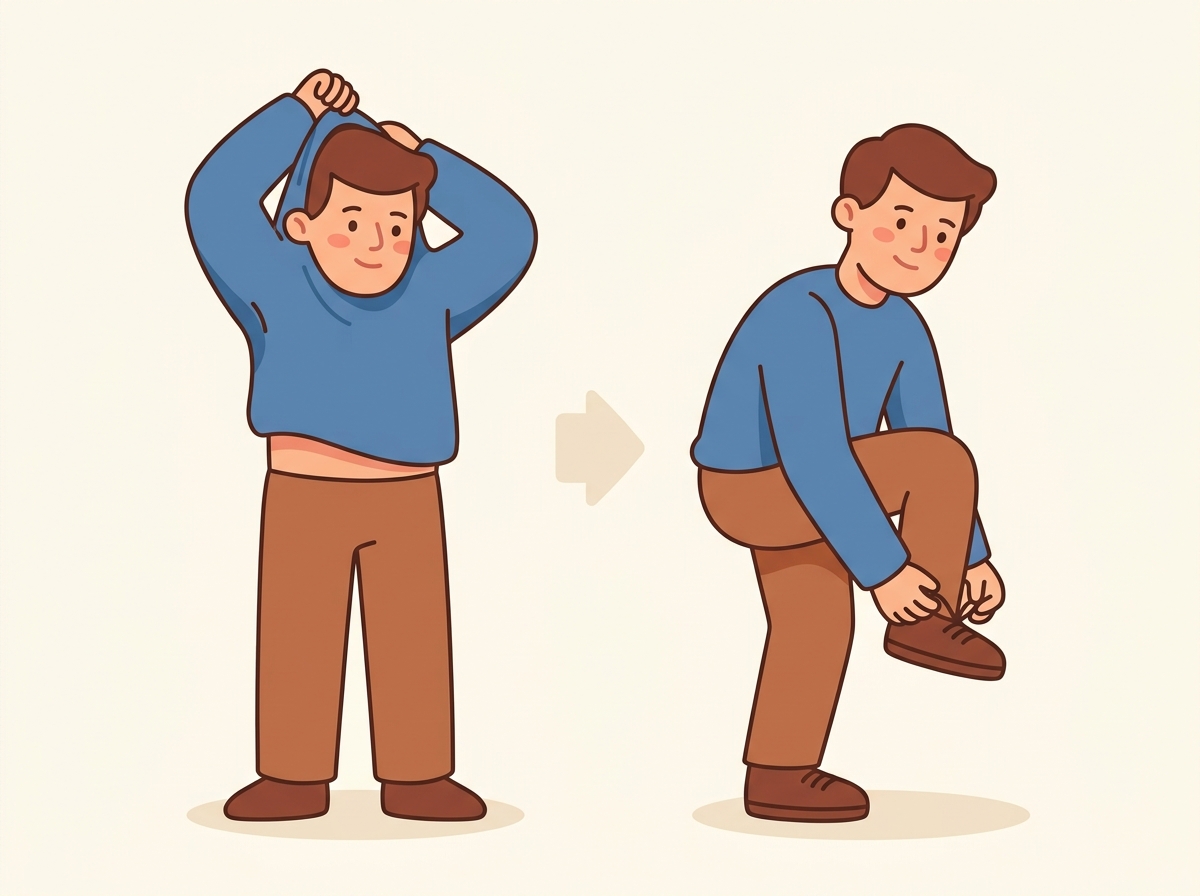
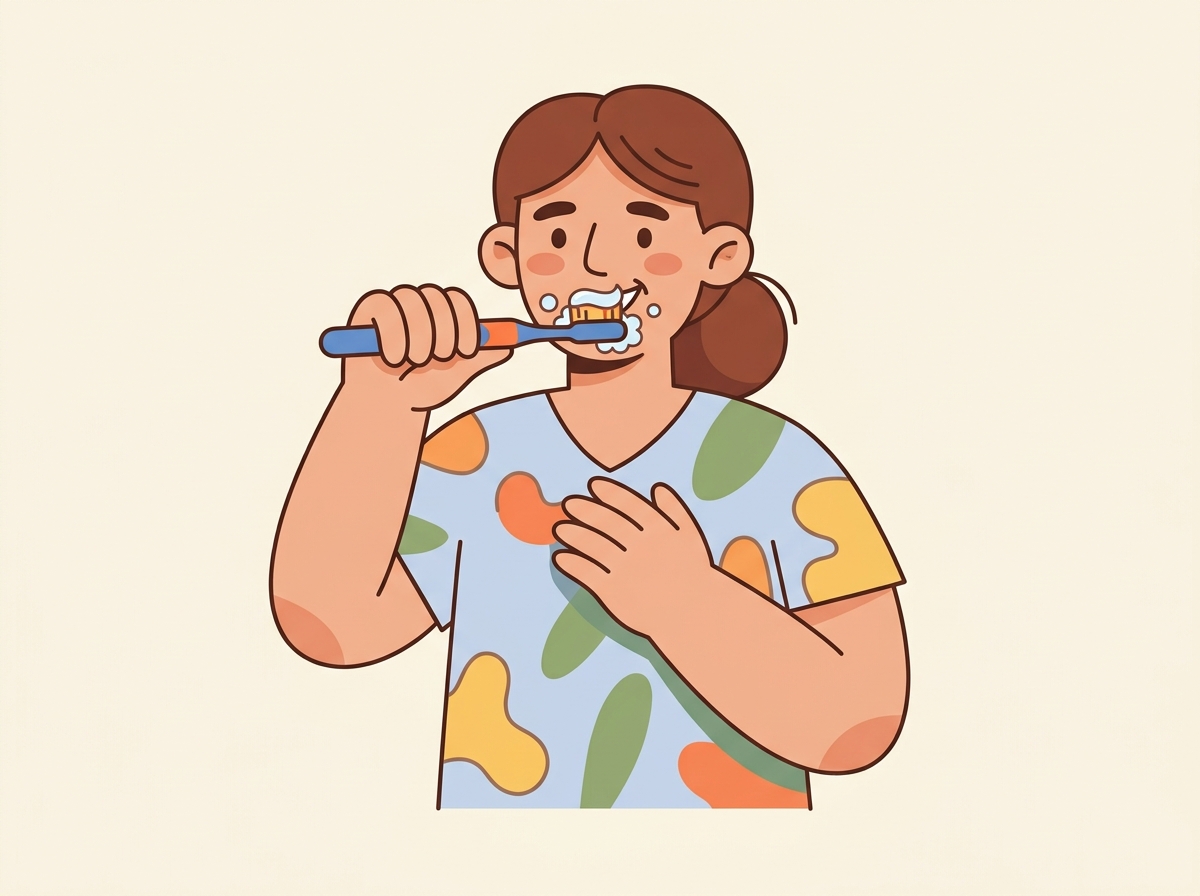
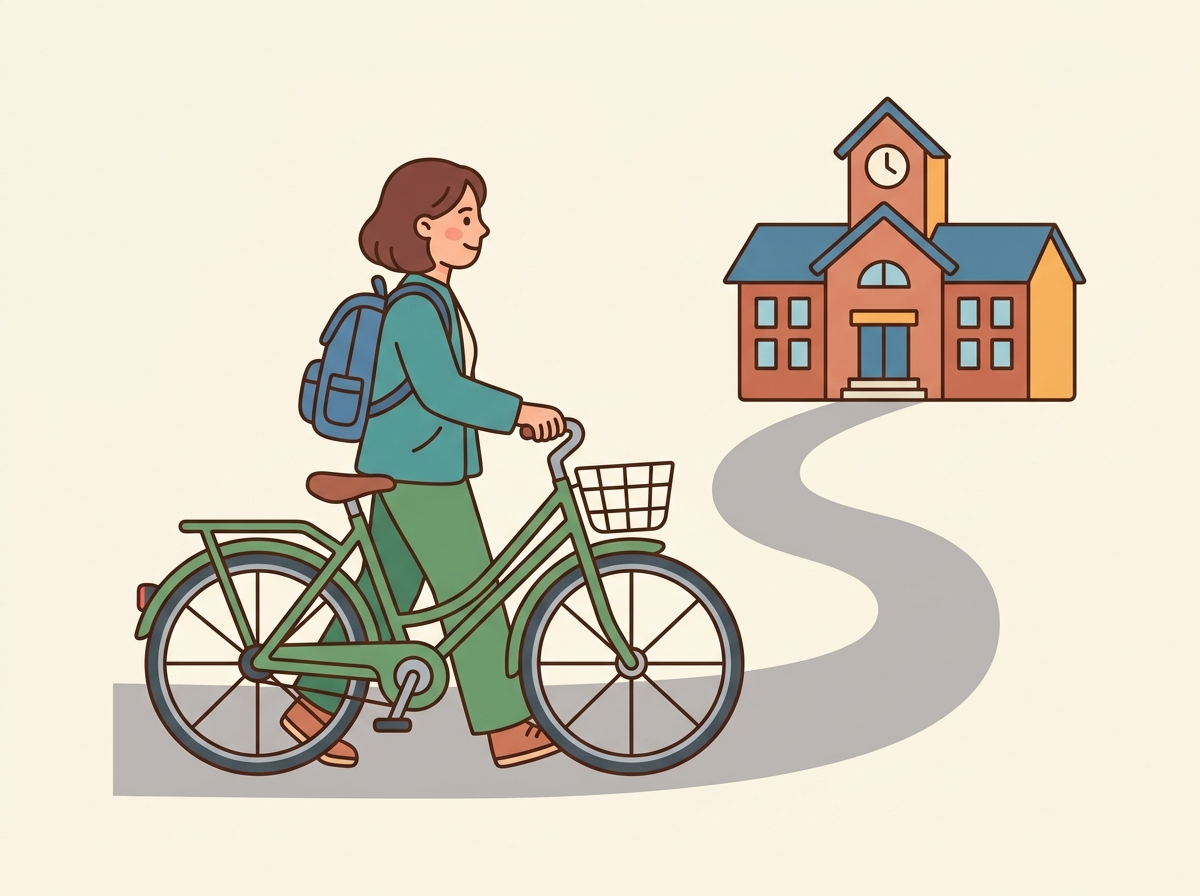
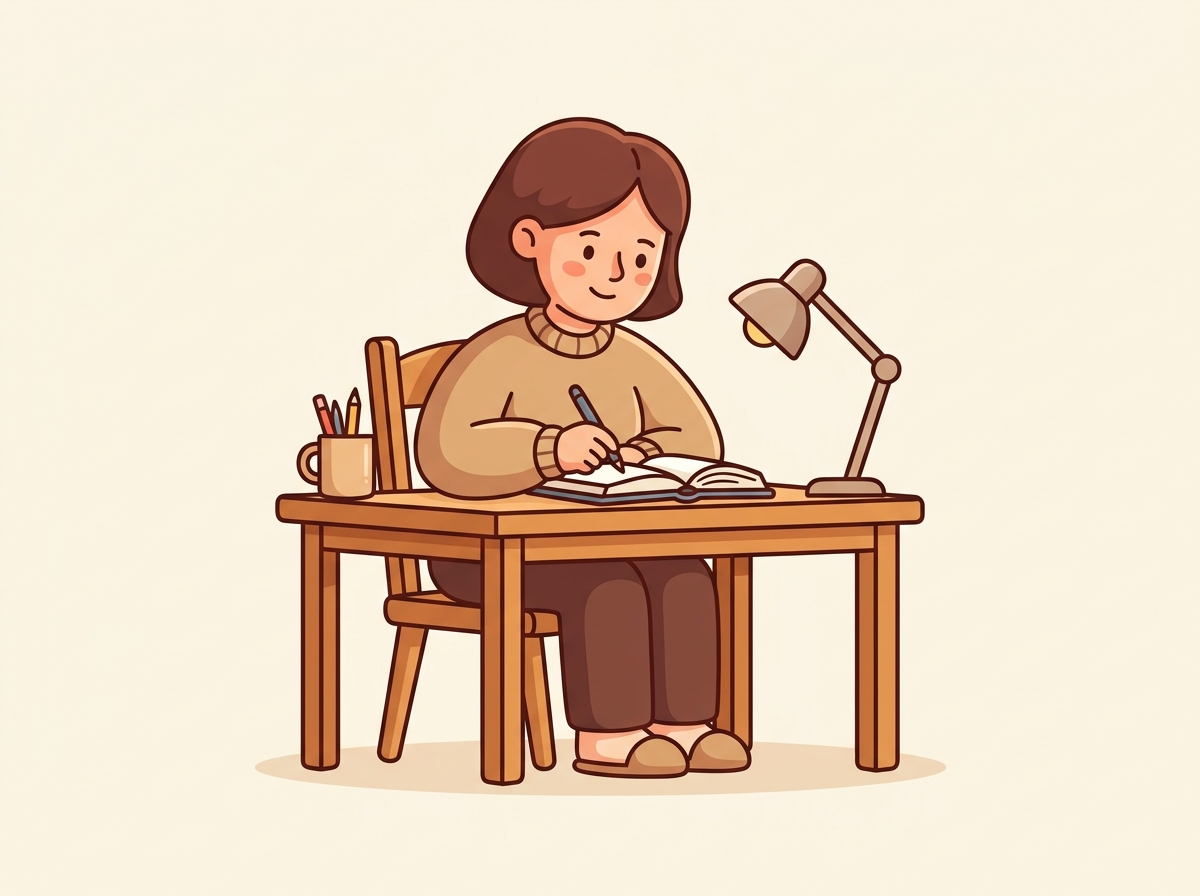
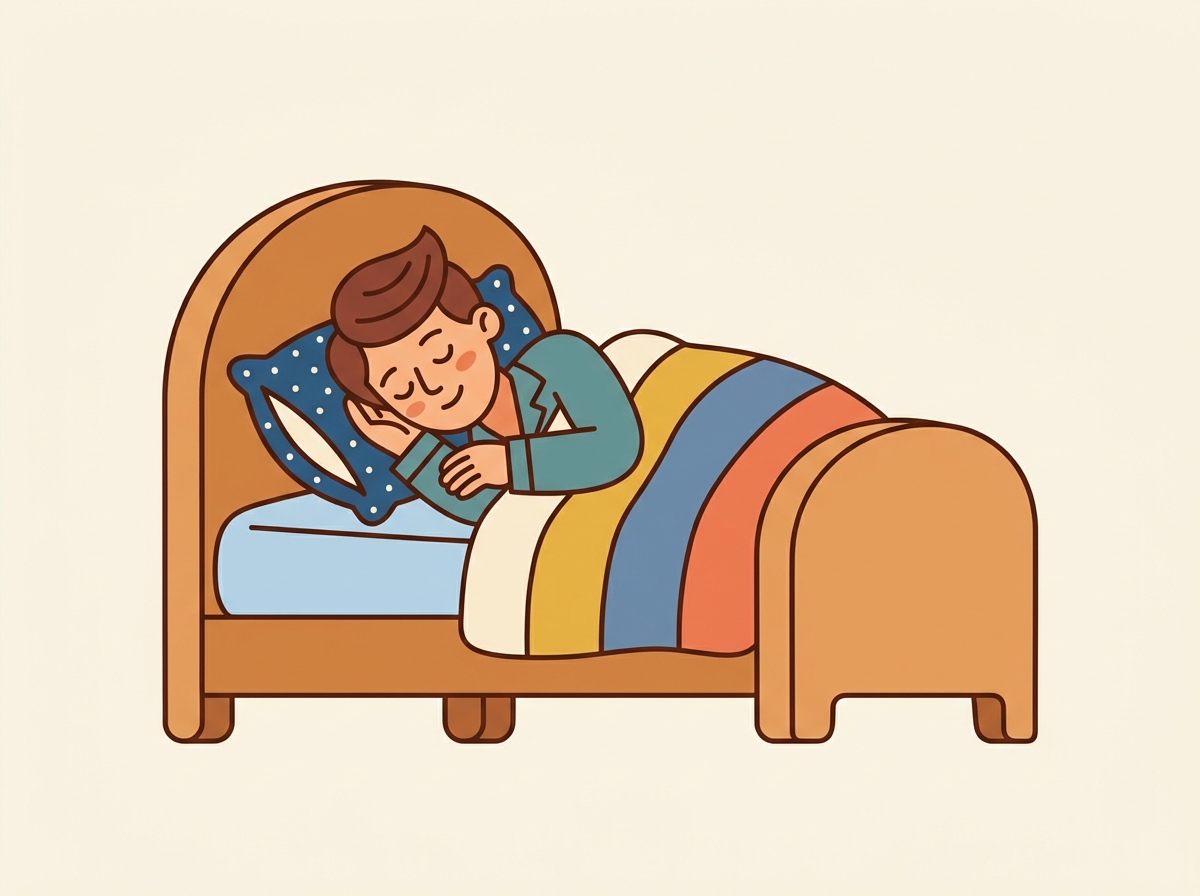
every pack draws its whole vocabulary set in one consistent style
The lesson flow
- 8′Warm-up — Teacher mimes waking up, stretching, and yawning. Children copy the actions and shout 'Wake up!' together. Teacher then mimes eating breakfast and brushing teeth, asking children to guess and act along.
- 12′Presentation — Teacher shows flashcards one by one (wake up, get dressed, eat breakfast, brush my teeth, go to school, do my homework, go to bed) and says each phrase with a mime. Teacher introduces the frame 'I always [verb].' using gestures for 'always,' 'usually,' and 'never,' modeling with two or three vocabulary items.
- 15′Practice — Teacher calls out a routine picture and a frequency adverb (always, usually, never); children stand up and say the full sentence aloud, e.g. 'I never brush my teeth' with a silly face for fun. Teacher then puts children in pairs to take turns saying three sentences each using different vocabulary and adverbs.
- 15′Song — Teacher plays the song 'My Day, My Way' and leads actions for each routine word. Children sing the chorus twice, focusing on the repeated frame 'I always... I never...' while doing the matching mimes.
- 10′Wrap-up — Teacher asks a few children to share one true sentence about their own routine using the frame. Class claps after each sentence, and teacher reviews flashcards one last time by holding them up for a quick chant.
The song — “My Day, My Way”
bouncy pop chant · 112 BPM
Verse
Wake up, wake up, open your eyes
I always wake up when the sun starts to rise
Eat breakfast, eat breakfast, yummy and warm
I usually eat breakfast before the school horn
Chorus
I always, I always, do it every day
I never, I never, skip it, no way
This is my day, my way, my day
Verse
Get dressed, get dressed, put on my shirt
Brush my teeth, brush my teeth, clean and alert
Go to school, go to school, walking so fast
I usually go to school before the bell's blast
Chorus
I always, I always, do it every day
I never, I never, skip it, no way
This is my day, my way, my day
Verse
Do my homework, do my homework, sitting at my desk
Go to bed, go to bed, time to rest
Chorus
I always, I always, do it every day
I never, I never, skip it, no way
This is my day, my way, my day
Teaching tip — Keep a steady clap on every beat and encourage children to do the matching mime for each routine word as they sing.
Four-skills practice
Listen and Order the Day
7 minGive students a strip with 7 pictures (or words) for the routine actions, in mixed order. Read the script aloud twice at normal speed. Students number the pictures 1–7 in the order they hear them.
Listen to Sam's day. Number the actions in order. Hi! I'm Sam. Let me tell you about my day. I always wake up at seven o'clock. Then I usually eat breakfast with my family. After that, I always get dressed quickly. I always brush my teeth after breakfast. Then I usually go to school with my friend. In the evening, I usually do my homework. I always go to bed at nine o'clock.
Answers: 1. wake up 2. eat breakfast 3. get dressed 4. brush my teeth 5. go to school 6. do my homework 7. go to bed
Always, Usually, Never Chain
8 minPut students in pairs. Give each pair the prompt card below. Students take turns saying full sentences using a different frequency adverb each time, then swap roles.
Talk with your partner. Use always, usually, or never. 1. Say: "I always wake up at..." 2. Say: "I usually eat breakfast..." 3. Say: "I never..." (choose an action) 4. Ask your partner: "Do you always brush your teeth?" 5. Your partner answers: "Yes, I always brush my teeth." or "No, I usually brush my teeth." 6. Take turns until you both use all 7 actions.
Read About Mia's Day
6 minGive students the short text. They read it silently, then answer the true/false questions below in pairs.
Read about Mia. My name is Mia. I always wake up at seven o'clock. I usually eat breakfast with my brother. I always get dressed after breakfast. I usually brush my teeth in the bathroom. I never go to school by car. I walk! I usually do my homework after school. I always go to bed at eight thirty. True or False? 1. Mia always wakes up at seven o'clock. 2. Mia usually goes to school by car. 3. Mia always goes to bed at eight thirty. 4. Mia never eats breakfast.
Answers: 1. True 2. False 3. True 4. False
My Day Gap-Fill
7 minGive students the gap-fill text. They complete each sentence with a frequency adverb (always, usually, never) and the correct routine verb phrase from the box. Then they can read their sentences to a partner.
Complete the sentences. Use a frequency adverb and a phrase from the box. Box: wake up, eat breakfast, get dressed, brush my teeth, go to school, do my homework, go to bed 1. I ______ ______ at seven o'clock. 2. I ______ ______ with my family. 3. I ______ ______ after breakfast. 4. I ______ ______ every morning. 5. I ______ ______ with my friends. 6. I ______ ______ after school. 7. I ______ ______ at nine o'clock.
Answers: Answers will vary, but each sentence needs a frequency adverb (always/usually/never) + one routine verb phrase. Example: 1. I always wake up at seven o'clock. 2. I usually eat breakfast with my family. 3. I always get dressed after breakfast. 4. I always brush my teeth every morning. 5. I usually go to school with my friends. 6. I usually do my homework after school. 7. I always go to bed at nine o'clock.
The quiz
1. I ______ at 7 o'clock every morning.
- wake up
- go to bed
- brush my teeth
- eat breakfast
2. After I wake up, I ______.
- eat breakfast
- go to bed
- do my homework
- go to school
3. I put on my clothes. This means I ______.
- get dressed
- brush my teeth
- wake up
- go to school
4. I use a toothbrush to ______.
- brush my teeth
- get dressed
- do my homework
- go to bed
5. I learn with my teacher when I ______.
- go to school
- go to bed
- wake up
- eat breakfast
6. I write and study at home. This is my ______.
- homework
- breakfast
- teeth
- bed
7. At night, I ______ because I am sleepy.
- go to bed
- wake up
- get dressed
- go to school
8. Choose the correct sentence.
- I always brush my teeth.
- I brush always my teeth.
- I always brushing my teeth.
- Always I brush my teeth.
9. Choose the correct sentence.
- I never eat breakfast.
- I eat never breakfast.
- I never eating breakfast.
- Never I eat breakfast.
Close the loop
The quiz isn’t a grade — it tells you what to bring back. If the class misses a word here — say “wake up” —your next LingoChorus lesson recycles it into the warm-up, the song and a quick check, so it sticks. That’s the Loop: plan → teach → assess → re-plan.
- One brief
- Lesson plan
- Flashcards
- Song
- Four skills
- Quiz
- Next lesson ↺
every part teaches the same target — and what the class misses returns next time
Want a lesson like this for your class?
Set your own age, level, topic and length — LingoChorus composes the whole pack.
Compose a lessonMore sample lessons
See all features or how it works.